
How to Become an Acute Care SLP in California: A Step-by-Step Guide
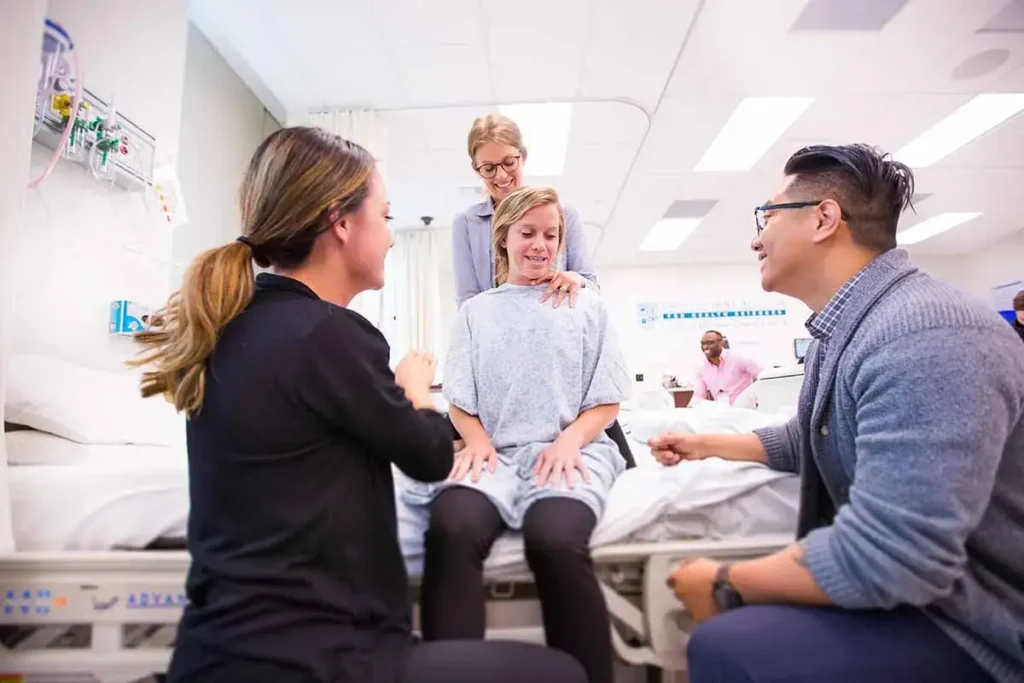
Los Angeles alone has 60 acute care SLP positions waiting to be filled.
A career as an acute care Speech-Language Pathologist brings both professional satisfaction and financial security, with weekly salaries in Los Angeles ranging from $1,896 to $2,413. The role requires you to understand hospital-based rehabilitation challenges and work with patients in their critical recovery phases. Many qualified SLPs want to know how they can prepare themselves and move into this specialized field. They also want to learn more about salary expectations before they make the switch.
This guide walks you through the process of becoming an acute care SLP in California step by step. You’ll find everything needed to succeed in this rewarding specialty, from education requirements to clinical experience.
Understand the Role of an Acute Care SLP
Being an acute care Speech-Language Pathologist (SLP) puts you right at the heart of patient recovery during critical illness or injury. The role is quite different from other healthcare settings. You need quick thinking and adaptability to handle a diverse patient caseload that changes constantly.
What does an acute care SLP do?
Acute care SLPs assess, diagnose, and treat many disorders that affect communication and swallowing. Here’s what they do every day:
- They evaluate and treat swallowing disorders (dysphagia), which stands as the number one diagnostic area treated by 33% of clinical service providers
- They look at cognitive-communication problems after stroke, traumatic brain injury, or other neurological events
- They perform specialized tests like modified barium swallow studies (VFSS) and flexible endoscopic evaluation of swallowing (FEES)
- They help with tracheostomy and ventilator care, including speaking valve evaluations
- They teach patients, families, and caregivers about conditions and treatment approaches
Your expertise makes a real difference in patient outcomes. To cite an instance, see how stroke patients who get SLP help in acute care are less likely to die after dysphagia treatment (27%), evaluation (58%), and screening (71%). On top of that, these patients have a 39-44% lower chance of getting pneumonia or similar complications.
Typical settings and patient populations
Healthcare settings employ about 39% of SLPs, with 13% working specifically in hospitals. As an acute care SLP, you’ll find yourself working in:
- General medical, VA, military, or university hospitals
- Critical care (ICU) units
- Step-down medical floors
- Emergency departments (based on hospital policy)
Patient ages range from infants to seniors, though some hospitals split pediatric and adult cases. Common patients include those with:
- Stroke and traumatic brain injuries
- Post-operative head and neck surgeries
- Intubations lasting more than 48 hours
- Respiratory conditions like COPD flare-ups
- Aspiration pneumonia
- Progressive neurological disorders
Patient numbers vary based on facility size – smaller hospitals might have 1-2 patients while larger centers see 30-40.
How acute care stands apart from other SLP roles
Acute care brings unique challenges that set it apart from other settings. The pace moves much faster – you make quick assessments and recommendations because patients stay for shorter periods. So you’ll spend more time on medical assessment, diagnosis, and education rather than long-term treatment.
Acute care SLPs work closely with doctors, nurses, dietitians, and other specialists as key members of treatment teams. This collaboration matters because you help plan discharges and make crucial safety recommendations.
The work looks very different from school-based SLPs who might see the same students for years. You’ll treat about 30 new patients weekly, each with unique needs. Most assessments happen right at the patient’s bedside using portable equipment, not in dedicated therapy rooms.
Meet the Educational and Certification Requirements
The path to becoming an acute care SLP in California follows specific steps in education, examination, and certification. You’ll need to build your credentials through several steps before working in hospital settings with critically ill patients.
Earn a master’s degree in speech-language pathology
You’ll need to complete a master’s degree from a program accredited by the Council on Academic Accreditation in Audiology and Speech-Language Pathology (CAA). These programs usually take 2-3 years and must have at least 60 semester units.
Students with undergraduate degrees in fields other than communication disorders need to complete prerequisite coursework before starting a master’s program. The main prerequisites are:
- Biological sciences (human or animal science focus)
- Physical sciences (specifically physics or chemistry)
- Social/behavioral sciences
- Statistics (as a standalone course)
- Courses in communication disorders fundamentals
Your master’s program combines academic coursework with clinical practicum hours. California requires at least 300 hours of supervised clinical practice across three different settings. Most CAA-accredited programs need 400 hours to meet ASHA standards.
Pass the Praxis exam
The next step is passing the Praxis Examination in Speech-Language Pathology (5331). This computer-based test checks your knowledge and skills through 132 questions in 150 minutes.
California licensure needs a minimum score of 162 on a 100-200 scale. Make sure to list ASHA (code R5031) and the California Speech-Language Pathology and Audiology Board (SLPAHADB) as score recipients when you register through Educational Testing Service (ETS).
Your exam must be taken within five years of your license application. ETS must send results directly to ASHA.
Apply for California licensure
After passing the Praxis, you can get your California SLP license through the SLPAHADB. The steps include:
- Submitting fingerprints for background checks
- Providing official transcripts confirming your master’s degree
- Verifying your Praxis exam scores
- Completing the Required Professional Experience (RPE) under a temporary license
- Paying application fees (around $115)
Recent regulatory changes have removed the need for a separate state examination, making the process simpler.
Get ASHA certification (CCC-SLP)
Getting the Certificate of Clinical Competence (CCC-SLP) from the American Speech-Language-Hearing Association is optional for state licensure but brings great professional benefits for acute care SLPs. The certification needs:
- Completion of all academic and clinical requirements
- A Praxis exam score of 162 or higher
- An ASHA application (costs about $490 with membership)
- A Clinical Fellowship (CF) lasting at least 36 weeks and 1,260 hours
- Your CF mentor’s verification of clinical skills
Note that you must finish all academic coursework and graduate clinical practicum before starting your Clinical Fellowship experience. ASHA usually takes about six weeks to review applications once they get all documents.
Meeting these educational and certification requirements helps you build the foundation needed to work in acute care settings. Your expertise will help improve patient outcomes during critical recovery phases.
Complete Clinical Fellowship and Gain Acute Care Experience
The Clinical Fellowship (CF) bridges the gap between your master’s degree and becoming an independent practitioner. This vital professional experience lets you apply academic knowledge and develop practical skills under supervision. Future acute care SLPs find this period invaluable to build specialized medical expertise.
Find a CFY placement in a hospital or acute setting
A CF position in acute care challenges you but pays off in the long run. Hospital-based clinical fellowships give you structured experiences with complex patient populations and specialized mentorship. Medical institutions like Johns Hopkins and Henry Ford Health offer dedicated acute care SLP fellowship programs lasting 12-13 months.
Here’s what to look for in acute care placements:
- Programs that expose you to patients of all types with neurological disorders, post-surgical needs, and ventilator/tracheostomy management
- Opportunities that pair you one-on-one with experienced SLPs
- Programs that help you earn additional certifications like MBS-ImP (Modified Barium Swallow Impairment Profile)
Some programs need specific prerequisites. You might need an acute care internship or knowledge of dysphagia diagnosis and treatment. So, relevant experience during graduate school externships makes your application stronger.
Build skills in swallowing, cognition, and communication
Direct clinical contact related to patient management should make up at least 80% of your CF experience in acute care settings. You’ll need to learn about:
- Bedside swallowing assessments: We assessed patients with dysphagia since swallowing disorders make up much of acute care caseloads
- Instrumental assessments: Many fellowships teach you videofluoroscopic swallowing studies (VFSS) and fiberoptic endoscopic evaluations of swallowing (FEES)
- Tracheostomy management: You’ll become skilled at working with trach/vent patients, including Passy-Muir valve assessments and suctioning
- Cognitive-linguistic evaluation: You’ll assess patients with neurological conditions of all types that affect cognition and communication
Many fellowship programs include surgery observations, multidisciplinary rounds, and journal clubs to improve your clinical knowledge. These educational opportunities help you combine research smoothly with practice—vital for evidence-based care.
Document and track your clinical hours
ASHA requires your CF to include at least 36 weeks of full-time professional experience (35 hours weekly) or its part-time equivalent, totaling 1,260 hours minimum. Part-time work needs at least 5 hours weekly.
Keep detailed records of:
- Weekly hours: Direct client contact should make up 80% of your work
- Types of clinical activities: Write down evaluations, treatments, reports, family consultations, and team meetings
- Patient populations: Note your experience with various diagnoses and age groups
- Supervision interactions: Record your CF mentor’s feedback, who must assess your performance at least once during each CF segment
The CF splits into three segments, each lasting 12 weeks minimum. Your mentor completes the Clinical Fellowship Skills Inventory (CFSI) form for each segment to show your progress. These forms become part of your ASHA certification application.
It’s worth mentioning that you must start your CF within 24 months of getting your certification application and finish within 48 months of starting. This timeline keeps your clinical skills fresh as you become an independent acute care SLP.
Apply for Acute Care SLP Jobs in California
Clinical experience under your belt? The California job market for acute care SLP positions awaits. A solid understanding of the marketplace and good preparation will set you up for success in this specialized field.
Where to find job listings
California gives acute care SLPs plenty of opportunities in healthcare settings of all sizes. Start your search with these key resources:
- Healthcare-specific job boards: Indeed, ZipRecruiter, and specialized platforms like Aya Healthcare list hundreds of acute care SLP positions in California
- Hospital system career pages: Major health systems like Stanford Health Care, Cedars-Sinai, and Community Health System regularly post acute care SLP openings
- PRN (as-needed) positions: These jobs are great entry points to acute care settings and currently pay around $50 per hour in some California facilities
Many facilities give their PRN SLPs first pick at full-time positions when they open up. This makes PRN work a smart way to break into acute care.
How to tailor your resume for acute care
A well-crafted resume helps you stand out in this competitive field. Your acute care SLP resume should have these key sections:
Contact Information: Put your California SLP license number and ASHA certification (CCC-SLP) front and center
Objective Statement: Highlight your medical speech pathology expertise, especially your acute care experience
Skills Section: Show both your technical abilities (swallowing assessments, tracheostomy management) and soft skills (critical thinking, teamwork with other departments)
Certifications: List your specialized training in FEES, VFSS, or other acute care-relevant certifications
Healthcare-specific keywords like “bedside swallow evaluations” and “speaking valve assessments” help your resume clear applicant tracking systems.
Understanding acute care SLP salary expectations
Acute care SLPs in California earn competitive pay alongside job satisfaction. Here’s what the numbers show:
- California tops the list as the highest-paying state for SLPs with an average annual salary of $114,050
- Los Angeles acute care SLPs earn between $39.90 and $53.89 hourly, with top performers making $70.94 per hour
- Full-time salaries grow with experience, starting at $74,000 for 1-3 years and reaching over $104,000 for 28-30 years in the field
Hospital-based SLPs in general medical settings earn $100,990 on average annually. This makes acute care one of the better-paying SLP specialties.
Prepare for Interviews and Onboarding
Landing an interview for an acute care SLP position is a huge step toward your career goals. Good preparation can mean the difference between getting rejected or receiving an offer.
Common interview questions for acute care SLPs
Interviewers test your clinical knowledge and problem-solving skills through specific questions. We focused on questions about your dysphagia experience—you should be ready to walk through your bedside swallowing evaluation process from getting the order to completion. You’ll also need to discuss specific clinical scenarios, like handling tracheostomy patients or complex trauma cases.
Your interviewers will ask about your strengths and weaknesses, whatever the setting. While discussing weaknesses, don’t mention traits that make you hard to train, like “I struggle with technology”. Questions about your clinical experience will come up, so have a clear description of your background ready.
How to prepare for acute care SLP work environment
Acute care settings need great communication skills. You should practice explaining dysphagia concepts to people who don’t know the field, since you’ll talk to patients, families, nurses, and doctors often. Keep up with dysphagia research and evidence-based practices because swallowing evaluations will fill most of your day.
What to expect during hospital onboarding
Hospital onboarding includes facility orientation, documentation training, and department protocols. Many hospitals pair you with experienced SLPs who watch your clinical skills before you can practice independently. You’ll pick up hospital assessment tools and learn team collaboration processes to give the best patient care.
Start Your Career Now
A career as an acute care SLP in California provides professional fulfillment and financial stability. The salaries are competitive at over $114,050 annually. This path helps you develop specialized skills in dysphagia management, cognitive-communication assessment, and tracheostomy care. These skills directly affect patient outcomes during critical recovery phases.
You’ll need dedication to earn your master’s degree, pass the Praxis exam, get California licensure, and complete your Clinical Fellowship. On top of that, specific acute care experience through hospital placements builds expertise. The ever-changing environment demands quick thinking and adaptability.
California’s healthcare world offers strong career prospects. Your resume should highlight relevant skills. Be ready for interviews that focus on clinical scenarios. Hospital facilities usually have detailed onboarding processes.
Acute care work is different from other SLP settings. You’ll make quick assessments while working with interdisciplinary teams and managing varied caseloads. In spite of that, this challenging specialty rewards you with professional growth. You’ll find satisfaction in making real differences during patients’ most vulnerable moments. With perseverance and specialized training, you can excel as an acute care SLP in California’s healthcare system.